

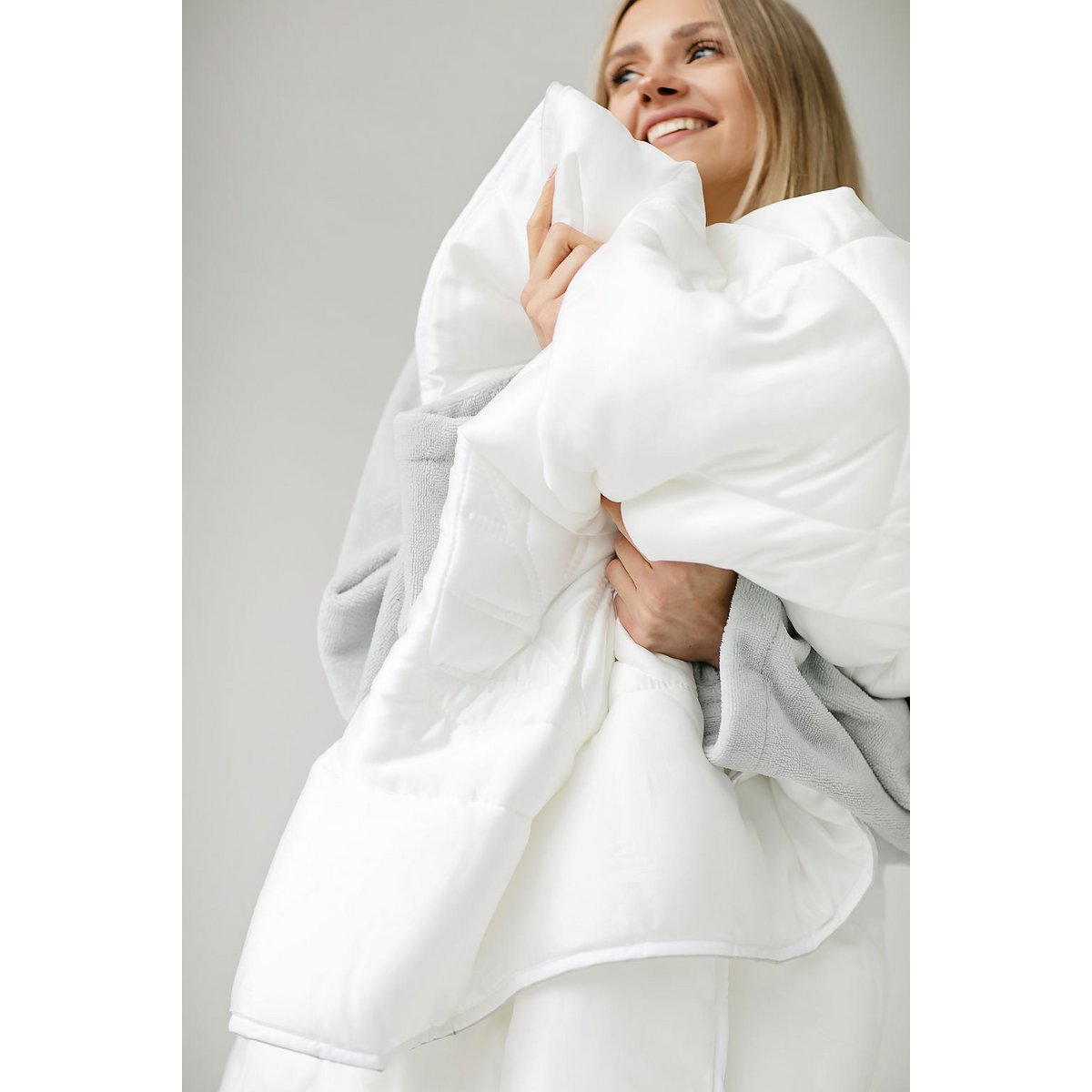
Down or feathers? The filling decides how much warmth a duvet gives for how much weight. This guide explains the difference between down and feathers, how to read a mixing ratio such as 90/10, what fill power (cuin) means and how warmth classes work, so that you can compare duvets by what is actually on the label.
Down vs. feathers: the difference
Down and feathers both come from waterfowl, but they are different materials. Down is the soft, three-dimensional cluster underneath the outer plumage: it has no quill, is very light and traps a lot of air. Feathers are the flat outer plumage with a stiff quill: they are heavier, hold less air and give a duvet more weight and a flatter, firmer feel.
- Structure: down is made of fluffy clusters without a quill; feathers are flat and have a quill.
- Warmth: down gives high warmth for very little weight; feathers give less warmth per gram, so a feather duvet has to be heavier for the same warmth.
- Weight and volume: down duvets are light and voluminueus; feather duvets are heavier and flatter.
- Quills: down has none; the quills of feathers can occasionally work through the cover.
- Price: down is the more expensive filling; feathers are cheaper.
Neither is better in every case. A feather-and-down mix is a sensible compromise if you like a little weight and want to spend less; a high down share suits anyone who wants a light, warm duvet.
Reading the mixing ratio (90/10, 60/40 …)
The ratio states the share of down first and the share of small feathers second, by weight. 90/10 therefore means 90 % down and 10 % small feathers; 60/40 means 60 % down and 40 % small feathers.
- 90/10: a down duvet in the proper sense – light, warm and the most expensive of the usual mixes.
- 60/40: noticeably more feathers, so a little heavier and flatter, at a lower price.
- 50/50 and 30/70: the feather share dominates; these behave more like a feather duvet than a down duvet.
The higher the down share, the lighter and warmer the duvet is for the same weight – and the higher the price. Check that the name on the packaging ("down duvet", "down and feather duvet") matches the percentages on the label.
Fill power (cuin) explained
Fill power measures how much volume one ounce of down fills in a standardised test. It is given in cuin – cubic inches per ounce. The higher the value, the more air the down traps and the more warmth you get per gram, so the manufacturer can use less filling for the same warmth and the duvet feels lighter.
As approximate guide values (they vary with the test method and manufacturer): around 500–600 cuin is a good everyday quality, around 600–700 is high quality, and above 700 is premium. Goose down usually reaches higher values than duck down – see our guide to duck down vs. goose down below.
Fill power says nothing about how much filling is in the duvet. Warmth depends on both the value and the fill weight in grams, so compare the two together.
Warmth classes: which one do you need?
There is no single legal scale for warmth classes. Manufacturers usually describe about five steps, and the numbering is not standardised: some count from 1 = lightest, others the other way round. Always read the description (summer, all-season, winter) next to the number. The table counts from 1 = lightest.
Warmth classes at a glance (1 = lightest)
| Class | Typical use | Room temperature (guide) |
|---|---|---|
| 1 | Summer duvet; very warm rooms or people who sleep hot | above about 20 °C |
| 2 | Light all-rounder; spring and autumn, warm sleepers | about 18–20 °C |
| 3 | Standard all-season duvet | about 16–18 °C |
| 4 | Winter duvet; cooler bedrooms | about 14–16 °C |
| 5 | Extra warm; unheated rooms, people who feel the cold | below about 14 °C |
Room temperatures are rough guides; personal warmth needs differ. Warmth-class numbering is not standardised across manufacturers, so always check the wording (light to extra warm) rather than the number alone.
Down Pass certification: what it signifies
Down Pass certification confirms that the down and feathers used have been sourced in accordance with recognised animal welfare standards, with full traceability back to the farm of origin.
Want to know which bird the down comes from? Read our guide to duck down vs. goose down. If you would rather avoid animal down altogether, our Tencel™ duvets – the Four Seasons Duvet and the High Summer Duvet – are made from plant-based TENCEL™ Lyocell.
Why Maison de Cocon
- Our duvet range includes the Tencel™ Four Seasons Duvet – a lighter summer duvet and a spring/autumn duvet that tie together for winter – and the Tencel™ High Summer Duvet (140 g/m²), our lightest option.
- TENCEL™ Lyocell cover and filling – breathable and plant-based



Leave a comment
All comments are moderated before being published.
This site is protected by hCaptcha and the hCaptcha Privacy Policy and Terms of Service apply.