

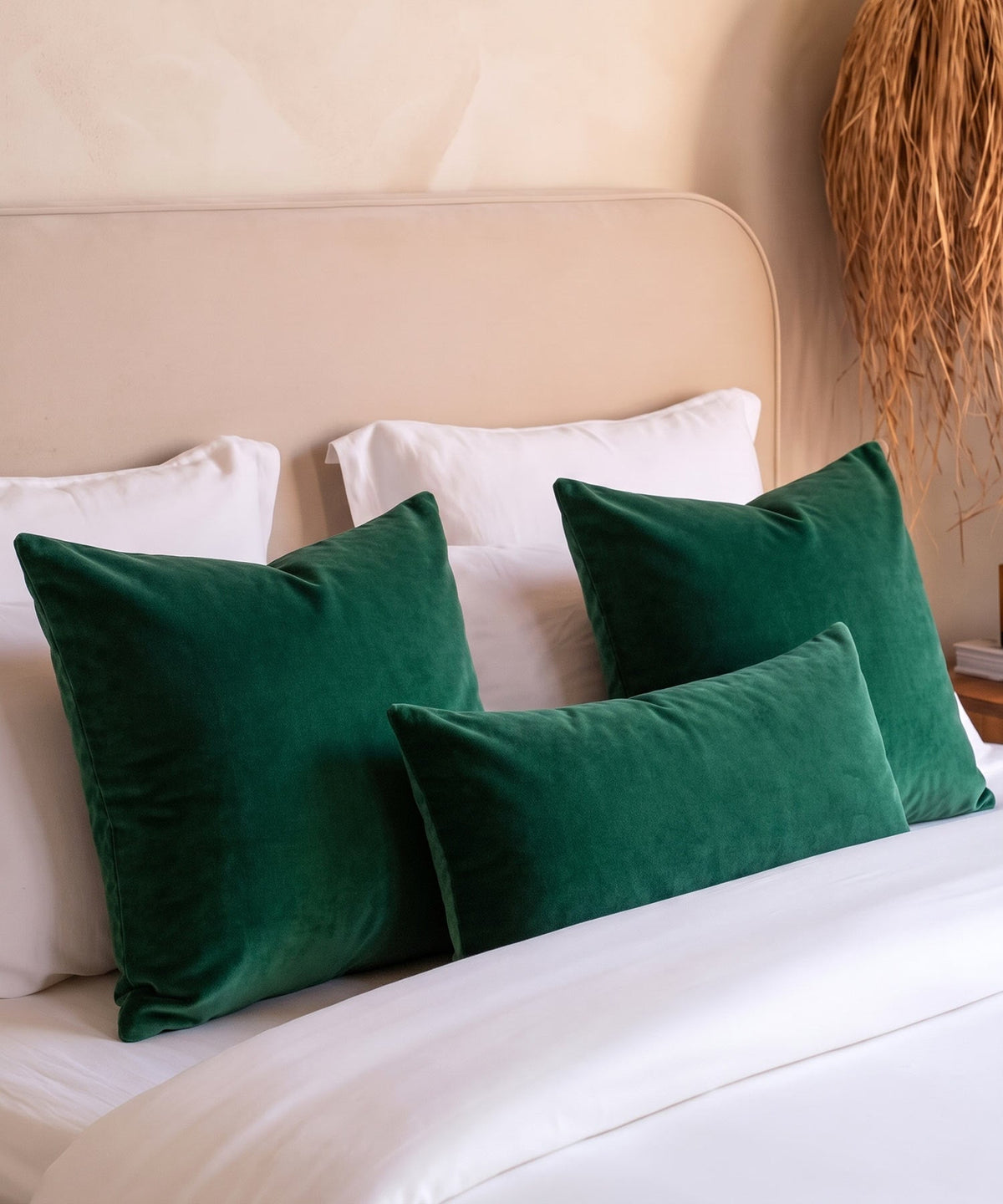
A single velvet cushion placed in front of the pillows changes a bed more than you'd expect: the soft, light-catching surface creates a contrast to smooth bedding and brings depth to an otherwise flat surface. But which size really works in front of the pillows, how many cushions look balanced, and can a fringed cushion be combined with a plain reversible one? This guide covers what matters when it comes to size, quantity, and color choice — and how velvet cushions work beyond the bed, on sofas and armchairs too.
Why velvet cushions work so well on a bed
Cotton or linen bedding usually has a matte, even surface. Velvet breaks with that: the short, dense pile catches light differently depending on the angle you view it from, making it feel more alive than a smooth fabric. Placed in front of the pillows, a velvet cushion gives the bed a second layer — not meant as an extra sleeping pillow, but as a design element that brings structure to the surface. In a pared-back bedroom with few colors, a single cushion is often enough to create an accent without overloading the space.
Which size works in front of the pillows?
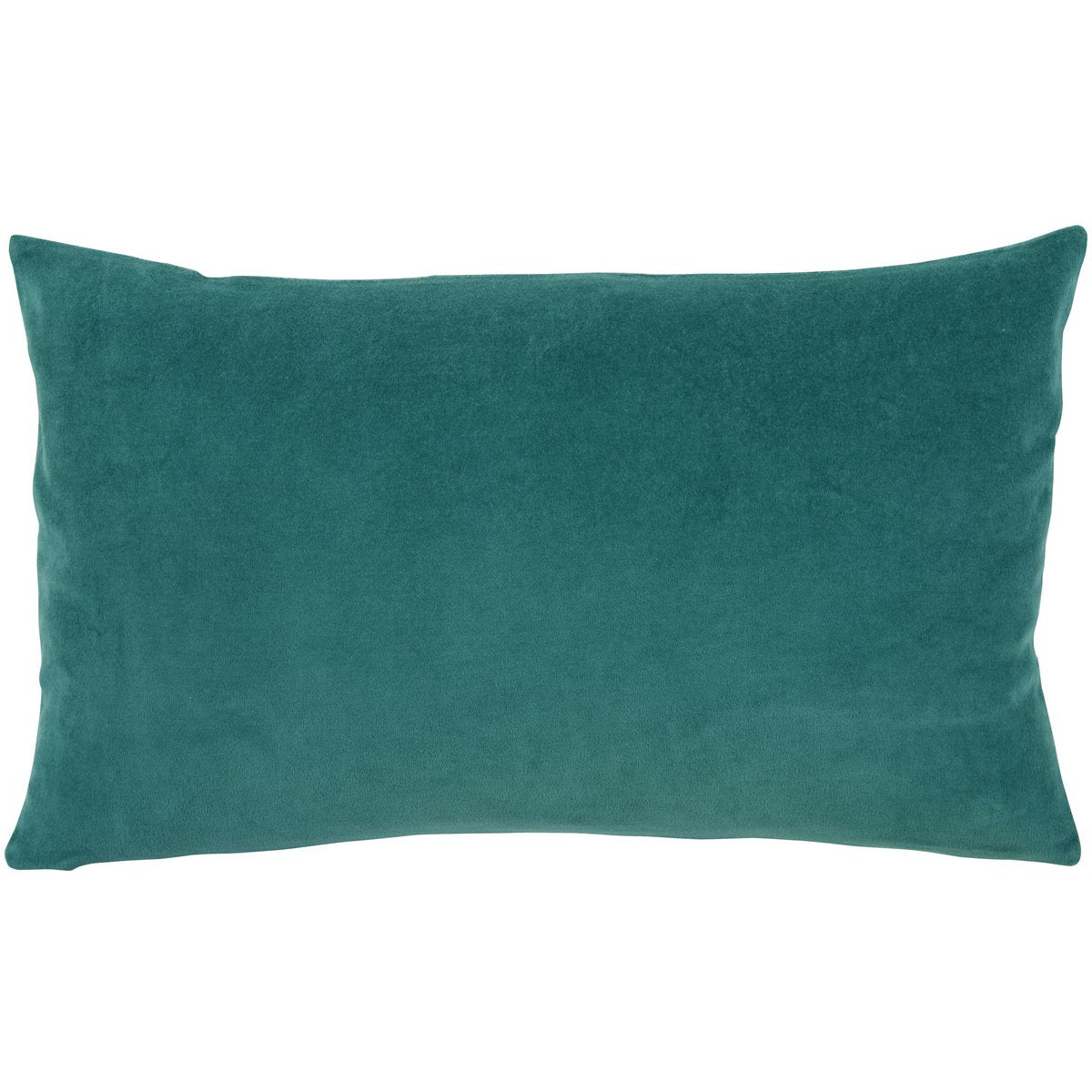
Velvet cushions come in three formats: 30×50 cm, 40×65 cm, and 45×45 cm. The small rectangle reads most as an accent and pairs well with a larger cushion without overcrowding the bed. The medium format covers roughly the same width as classic pillows, which is why it often works alone — either centered or placed in a pair side by side. The square 45×45 cm cushion works well as a second or third layer behind a rectangle when you want to stagger several sizes. Since each cushion is sold individually, you can choose format and color independently rather than committing to a fixed set.
How many cushions are enough?
The width of the bed is a useful guide for quantity.
- Single bed: one to two cushions
- Double bed, 140–160 cm: three to four cushions
- Wider double bed, 180–200 cm: four to five cushions
A common arrangement is two large sleeping pillows, one or two decorative cushions behind them, and one or two smaller velvet cushions in front. An odd number tends to look less rigidly symmetrical than an even one, but cushions can also be arranged in pairs if you prefer a calmer look. If you're unsure, start with one cushion and add more as needed — this can be adjusted at any time without having to replan the whole surface.
Fringed or reversible: two looks
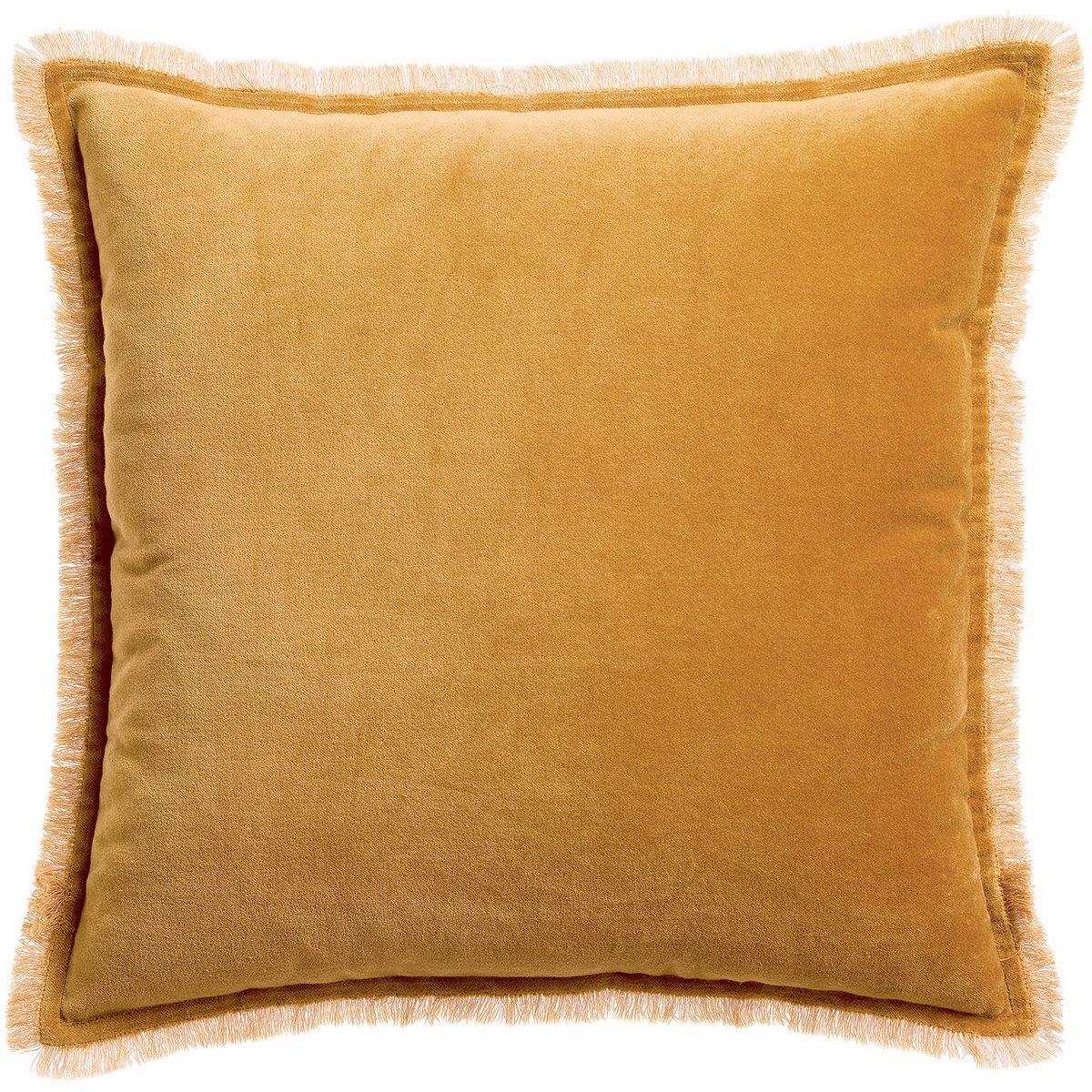
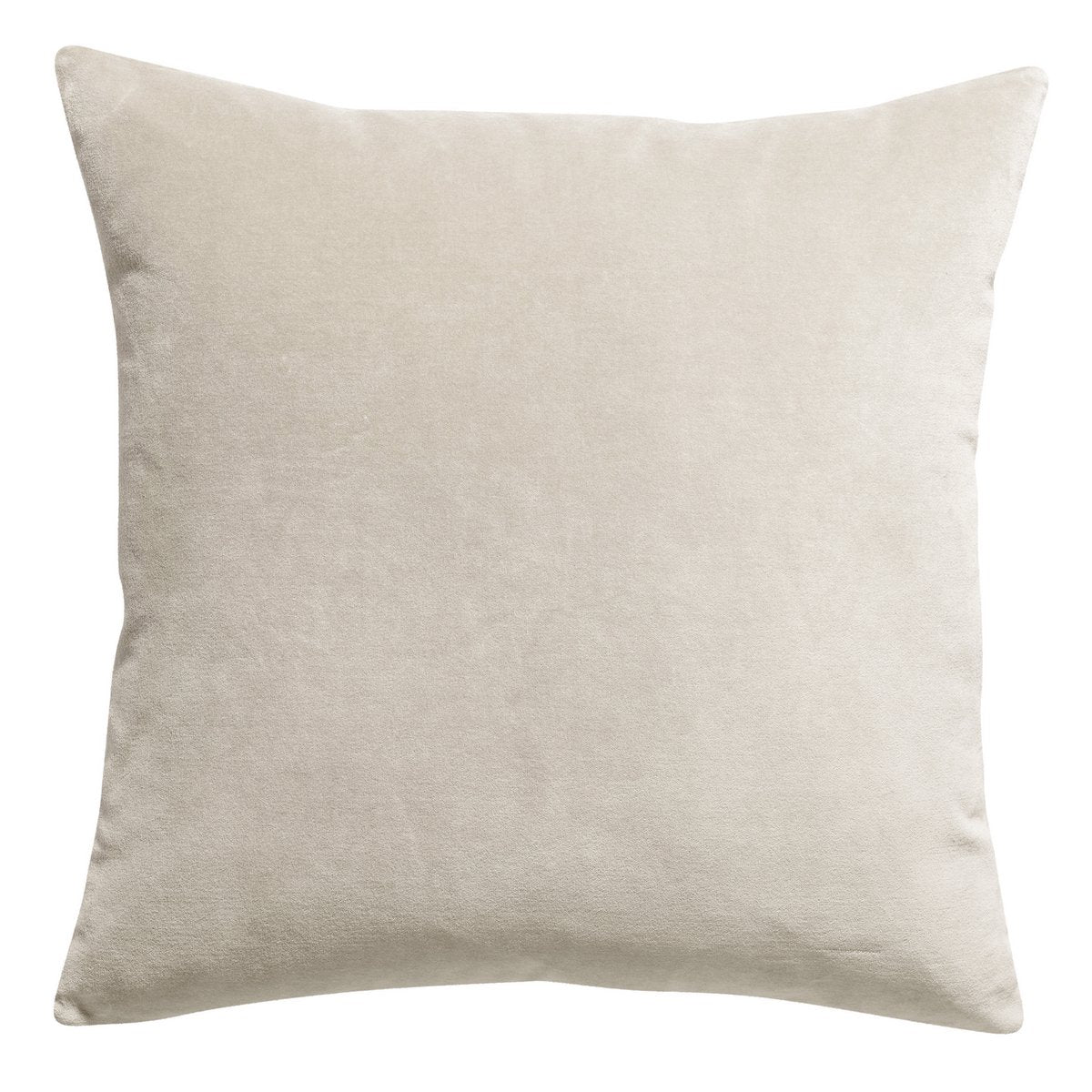
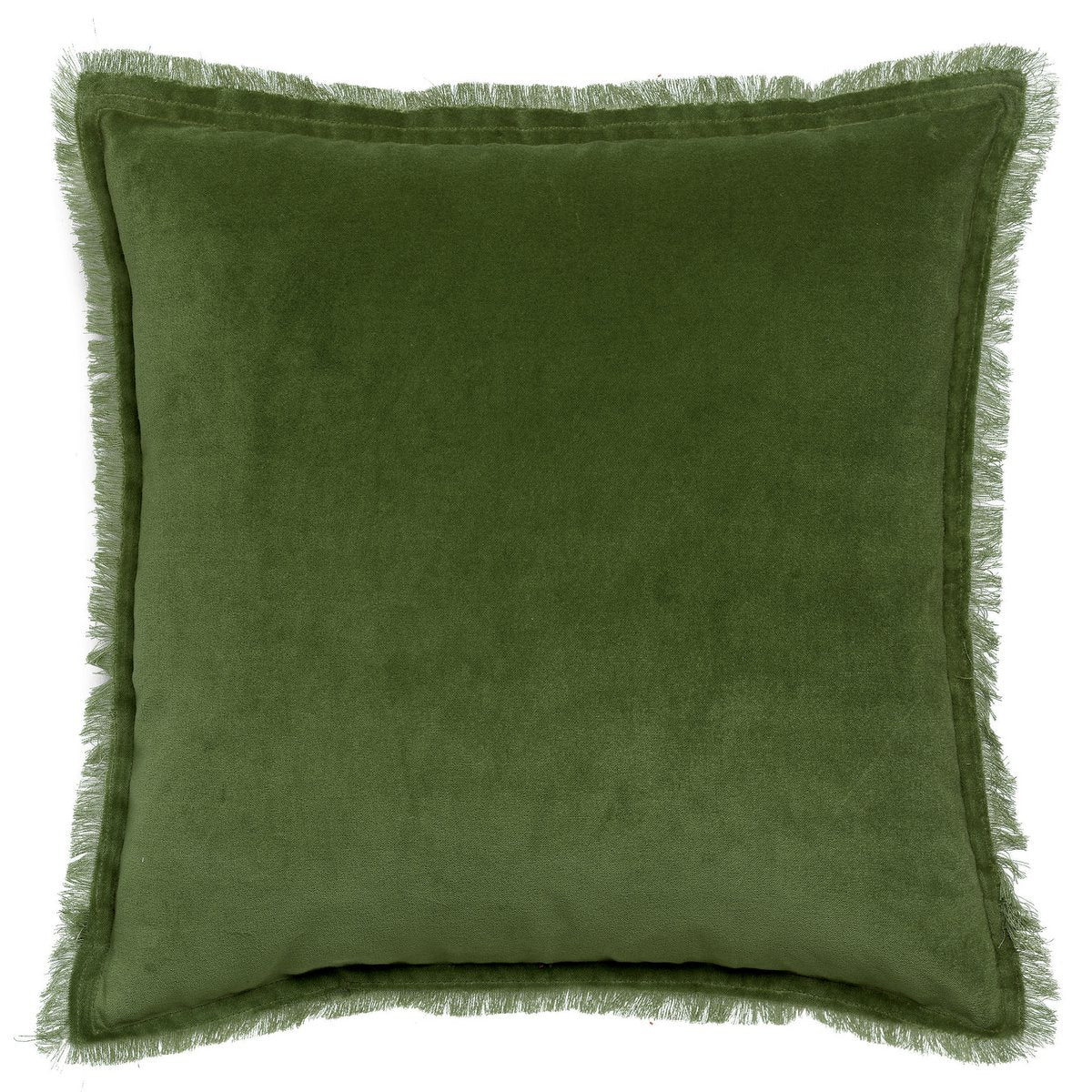
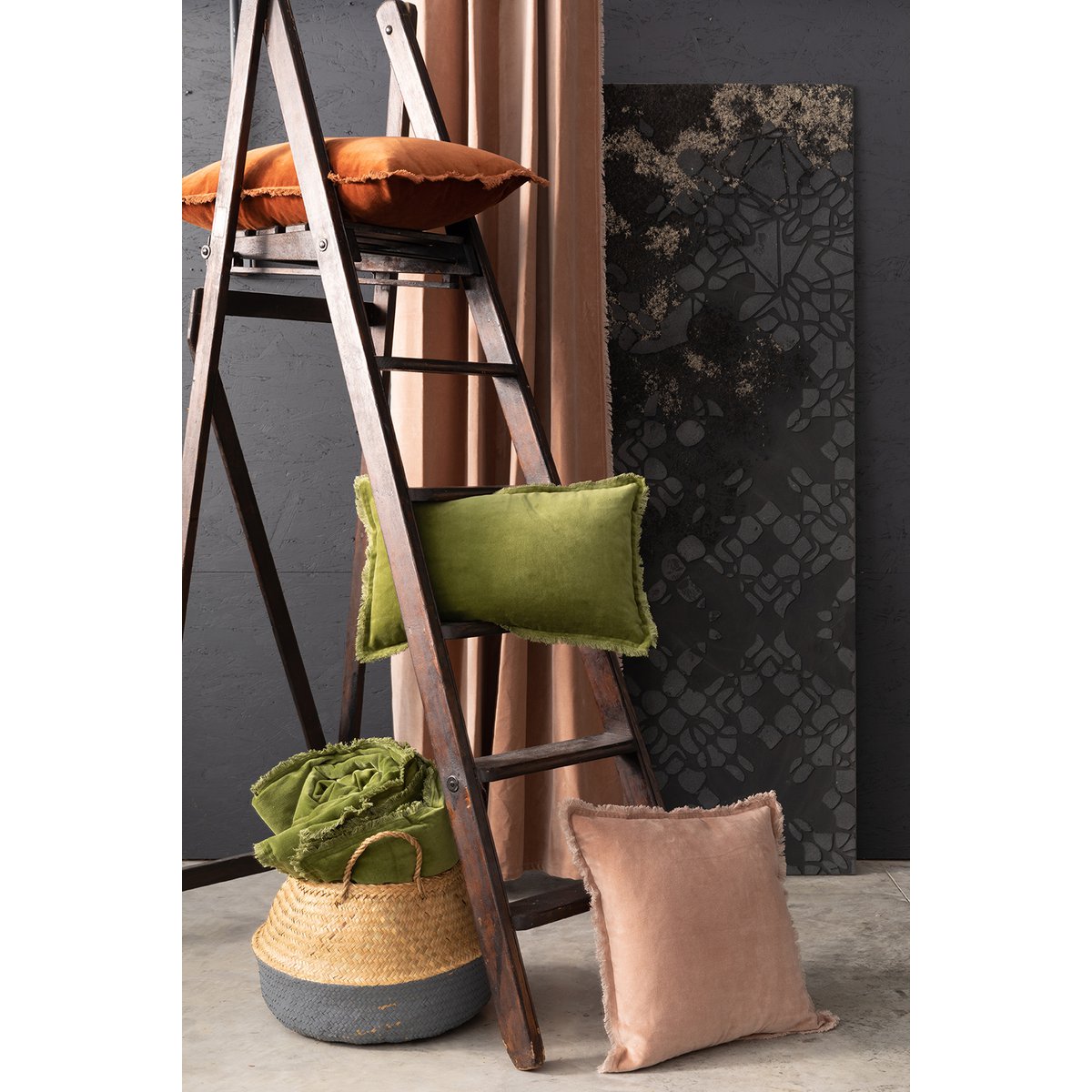
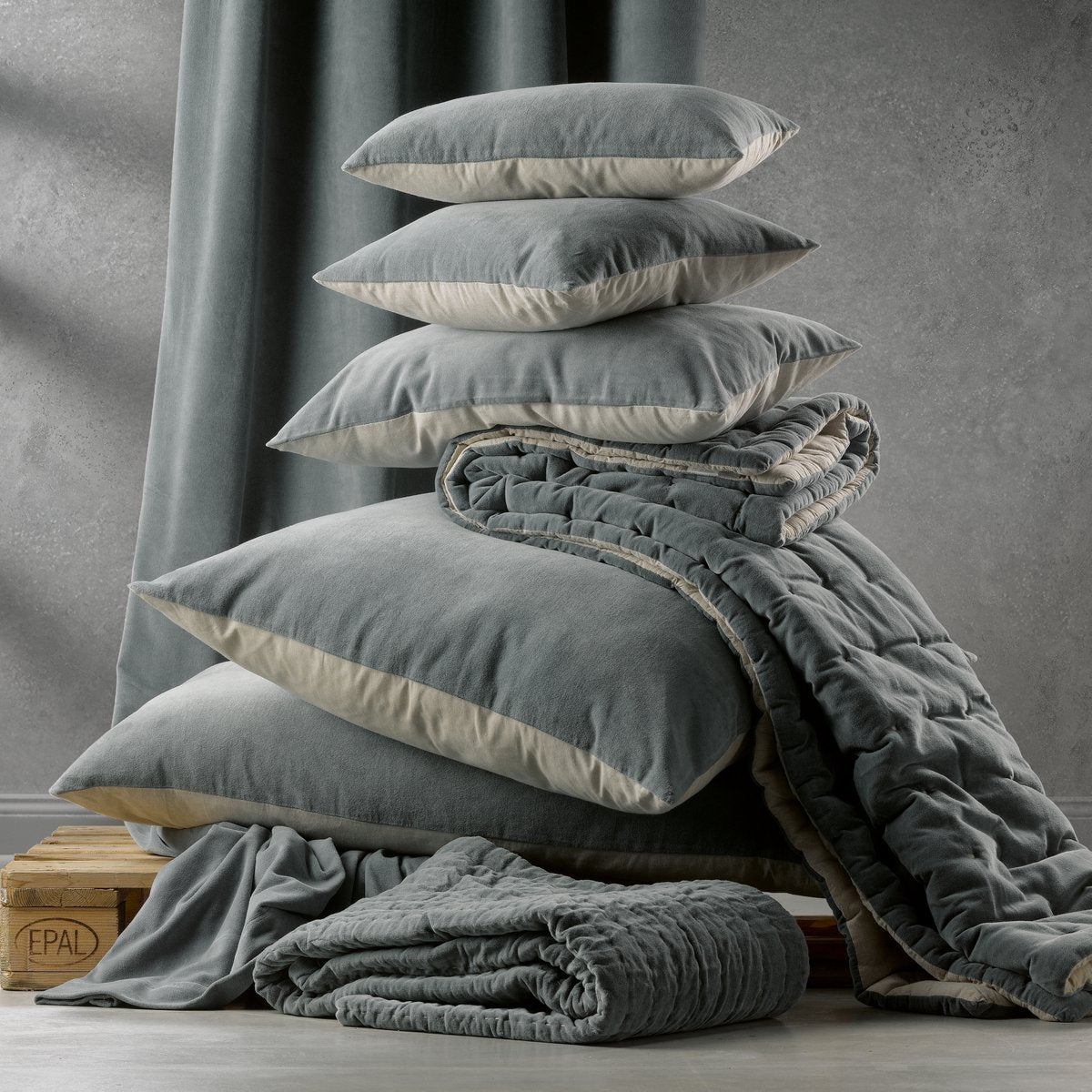
There are two styles to choose from. Fringed cushions are made almost entirely of pure cotton velvet and finish with a fringed edge that feels soft and gives the cushion a slightly textured border. Reversible cushions are made with two sides: one in cotton velvet, the other in cotton chambray in a natural linen shade, closed with a zipper instead of a fringed edge.
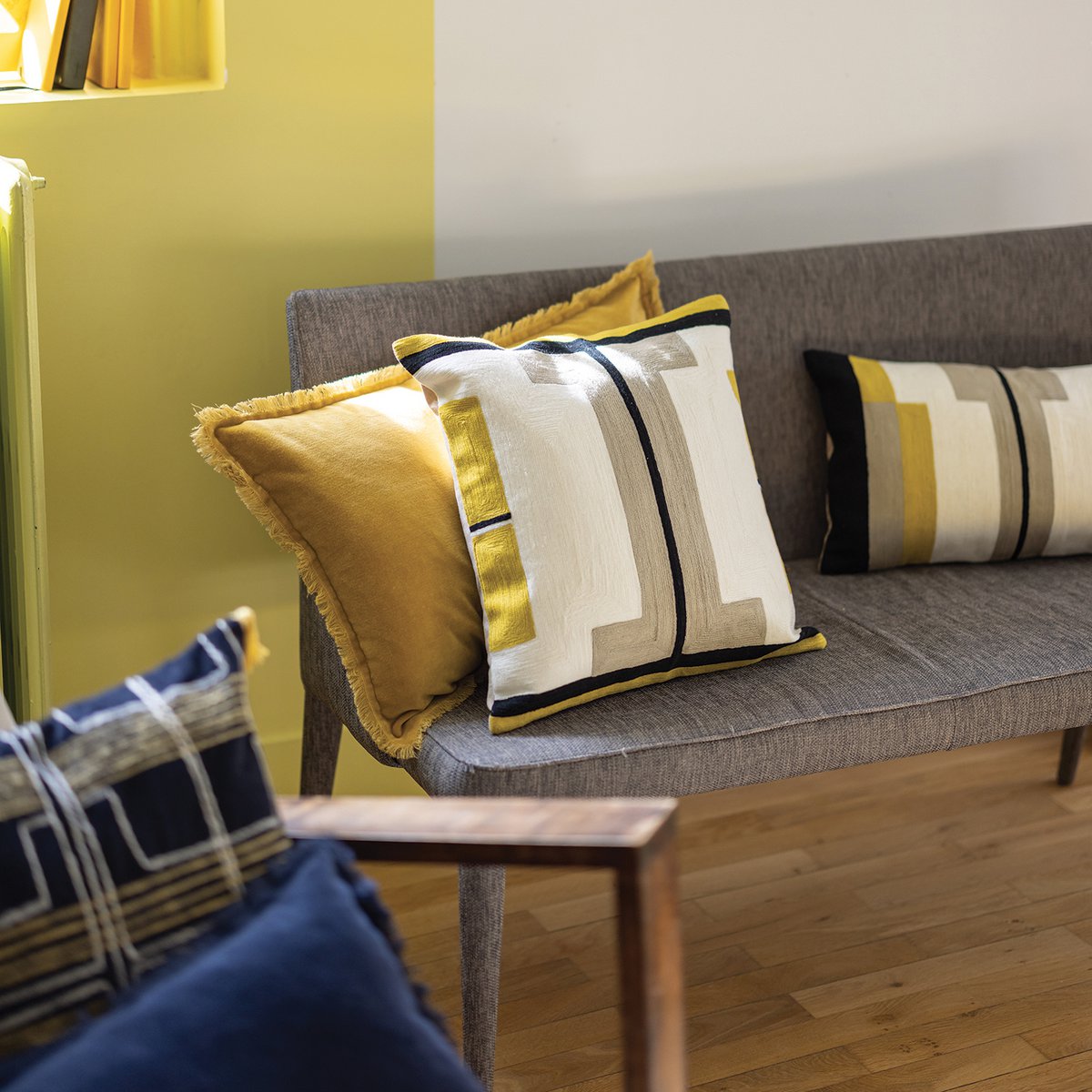
For a bed with a lot of texture already — striped bedding or a patterned bedspread, for example — a reversible cushion often looks calmer thanks to its smoother edge. Fringed cushions, on the other hand, add an extra tactile accent and work well when the rest of the bed is kept fairly simple. Since both versions can be freely combined with any format, you can also build a mixed look, such as a 45×45 cm fringed cushion in front and a 40×65 cm reversible cushion behind it.
Combining color and texture in the bedroom
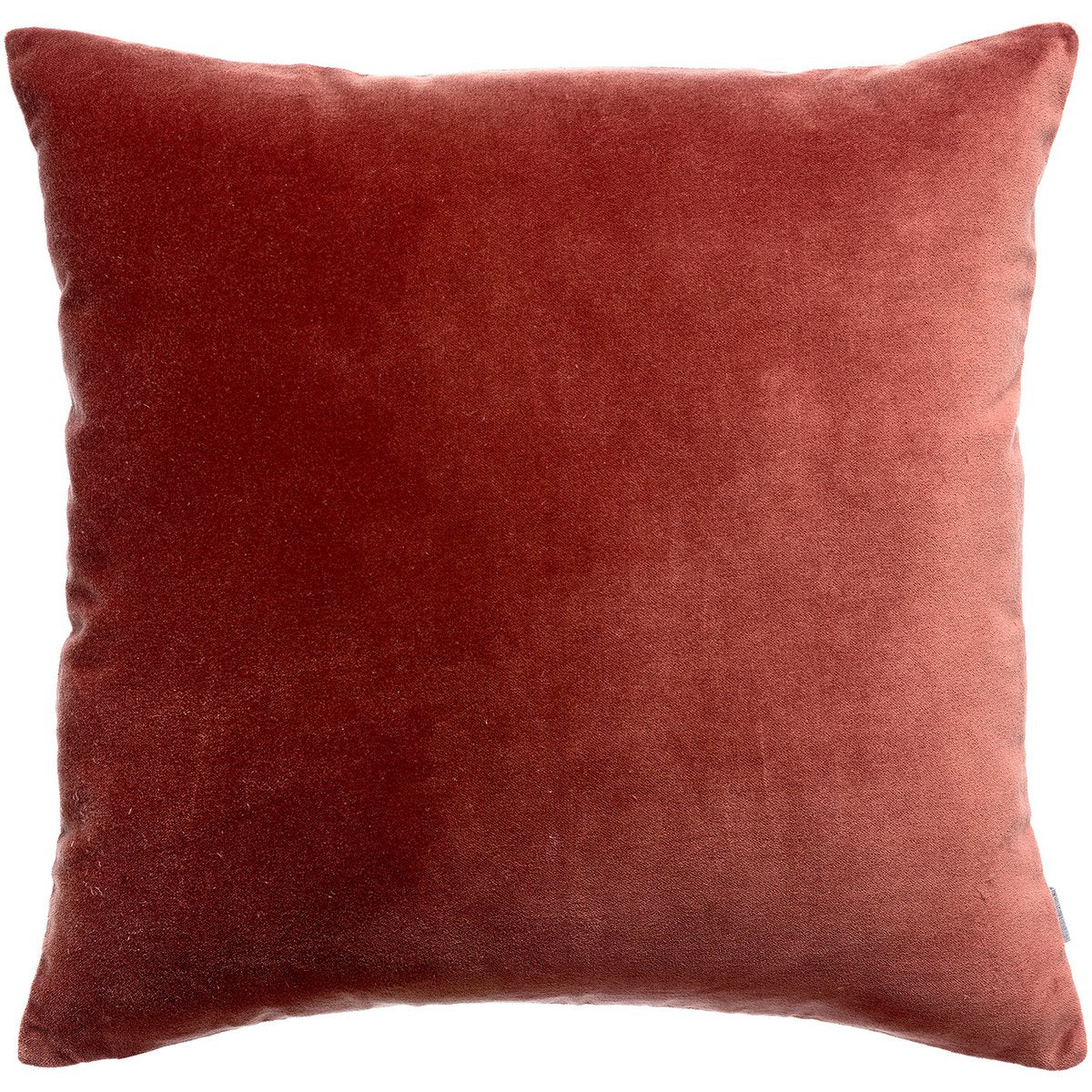
Color choice usually comes down to how it relates to the bedding. A velvet cushion in a tone that already appears in the bedding or curtains looks understated and blends in without drawing attention. A noticeably darker or richer tone than the bedding — a deep green or burgundy against light linen bedding, for example — creates a deliberate contrast instead. To see how much color shapes the overall atmosphere of a bedroom, read our article on how bedding color affects atmosphere and sleep. If you're combining several cushions, you can stay within one color family and vary only the formats, or deliberately pair two colors — in that case, it's worth limiting yourself to two or at most three tones so the overall look stays calm.
Beyond the bed: sofas and armchairs
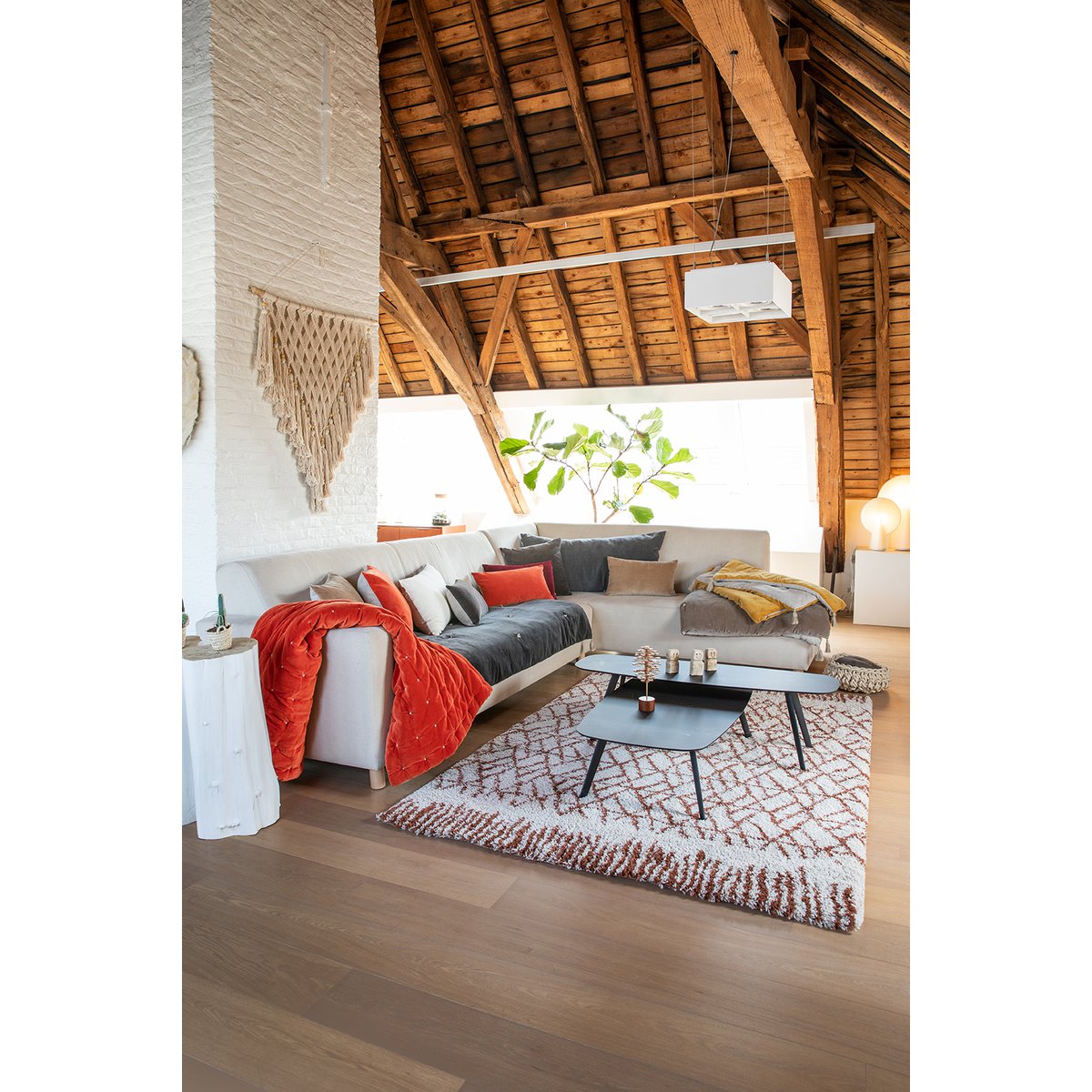
The same cushions work beyond the bedroom too. On a sofa or armchair in a reading nook or dressing area, the same formats can be used, usually spread a little more generously since there's more seating surface to work with. If you want to tie color and material together between the bedroom and an adjoining room, you can repeat one cushion from the bed on the armchair — this creates a connection between the two spaces without everything needing to look identical.
Adjusting by season
Velvet reads as visually heavier than cotton or linen, which is why it suits the cooler months, when thicker blankets and darker colors tend to take over anyway. In summer, the same cushion arrangement can be paired with lighter bedding, so only the background changes, not the cushions themselves. For more on how to prepare your bed for the colder season, see our guide for the cooler months.
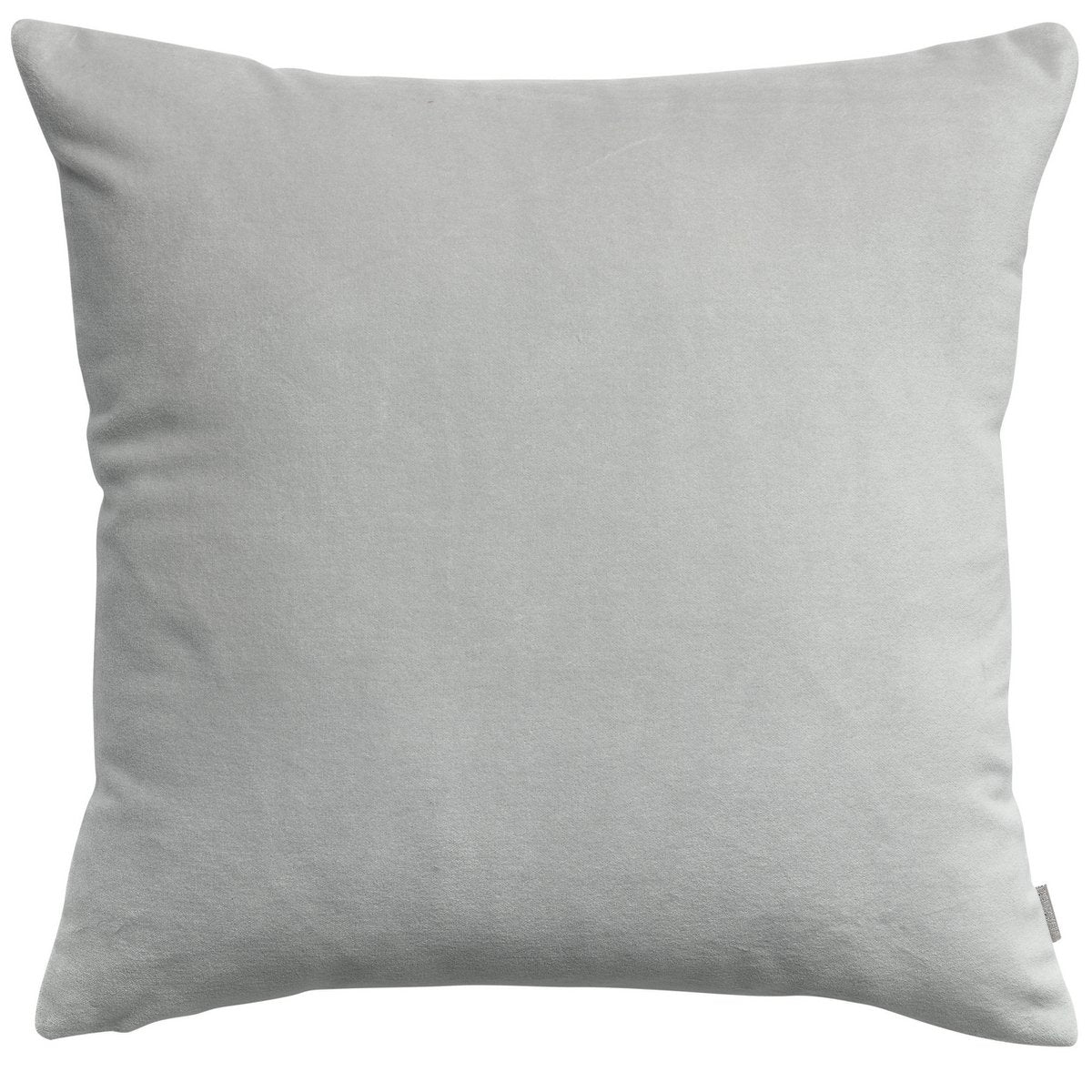
The selection below shows a portion of the colors and formats — from small accents to the square cushion for a second layer. The full Velvet Cushions collection shows every format and color individually so you can mix and match.
Velvet cushion sizes at a glance
| Format | Typical effect | Recommendation for the bed |
|---|---|---|
| 30×50 cm | small accent | in front, pairs well with larger cushions |
| 40×65 cm | classic width in front of pillows | alone in the center or in a pair side by side |
| 45×45 cm | square, calm format | as a second or third layer behind a rectangle |
Why Maison de Cocon
- Two styles are available: fringed cushions made of pure cotton velvet, and reversible cushions with cotton velvet on one side and cotton chambray in a linen shade on the other.
- Three formats — 30×50, 40×65, and 45×45 cm — can be freely mixed, depending on how much space you want to leave in front of the pillows.
- Each cushion is sold individually, so color and size can be combined independently instead of having to buy a fixed set.
- Reversible cushions, with their zipper and no fringed edge, have a cleaner look and suit a calmer, more streamlined style.
- Fringed cushions add a softer, textile accent against smooth bedding thanks to their edge.
Velvet Cushions · how bedding color affects atmosphere and sleep · how to prepare your bed for the colder season
Matching products






Leave a comment
All comments are moderated before being published.
This site is protected by hCaptcha and the hCaptcha Privacy Policy and Terms of Service apply.